
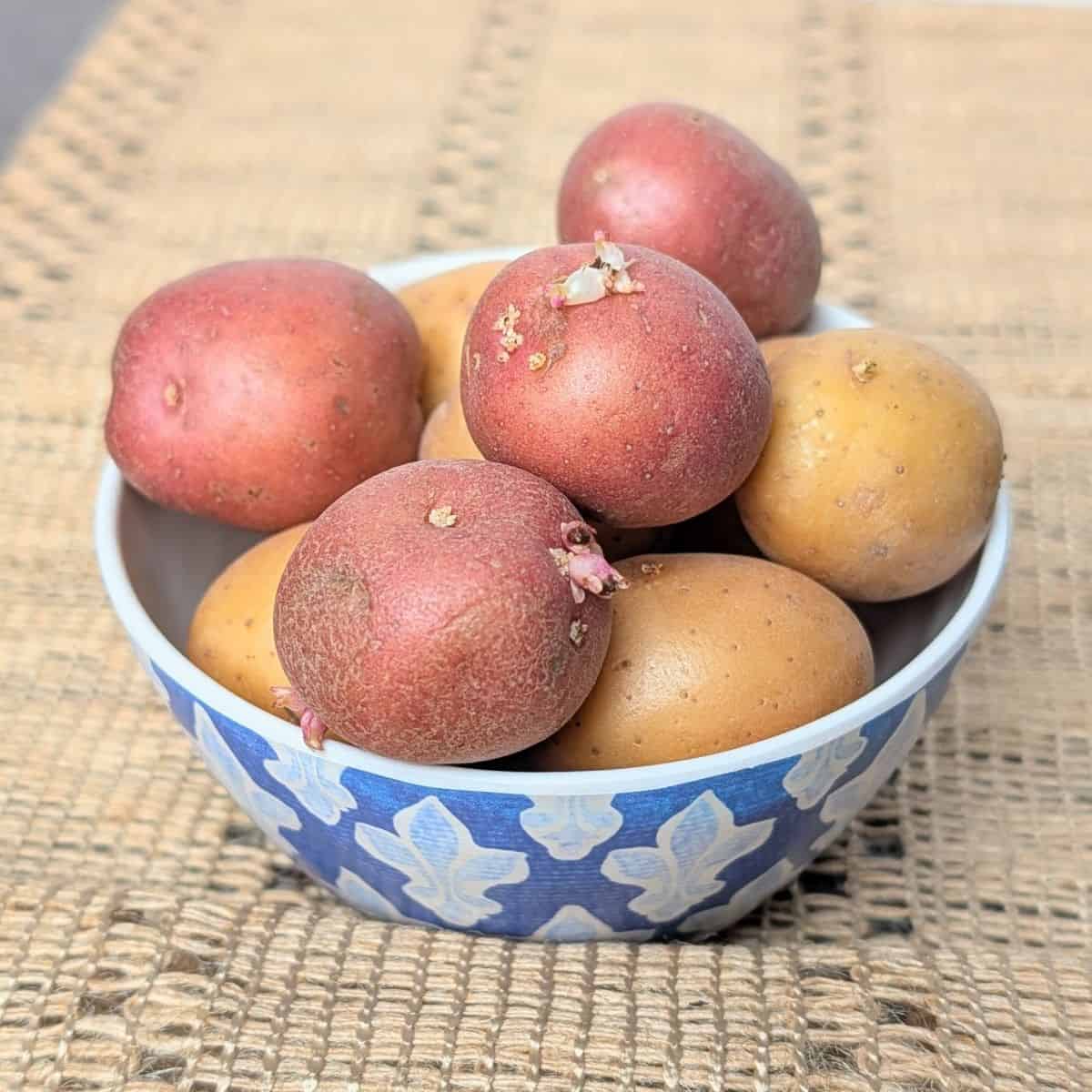
Finding sprouts on the potatoes in your pantry is annoying, but it doesn't always mean they are headed for the trash. What to do with sprouted potatoes depends on how firm they are, how long the sprouts are, and whether the skin has turned green. Here is how to tell if they are safe, how to trim them, how to store them, and which recipes put them to good use.
Jump to:
Can You Eat Sprouted Potatoes?
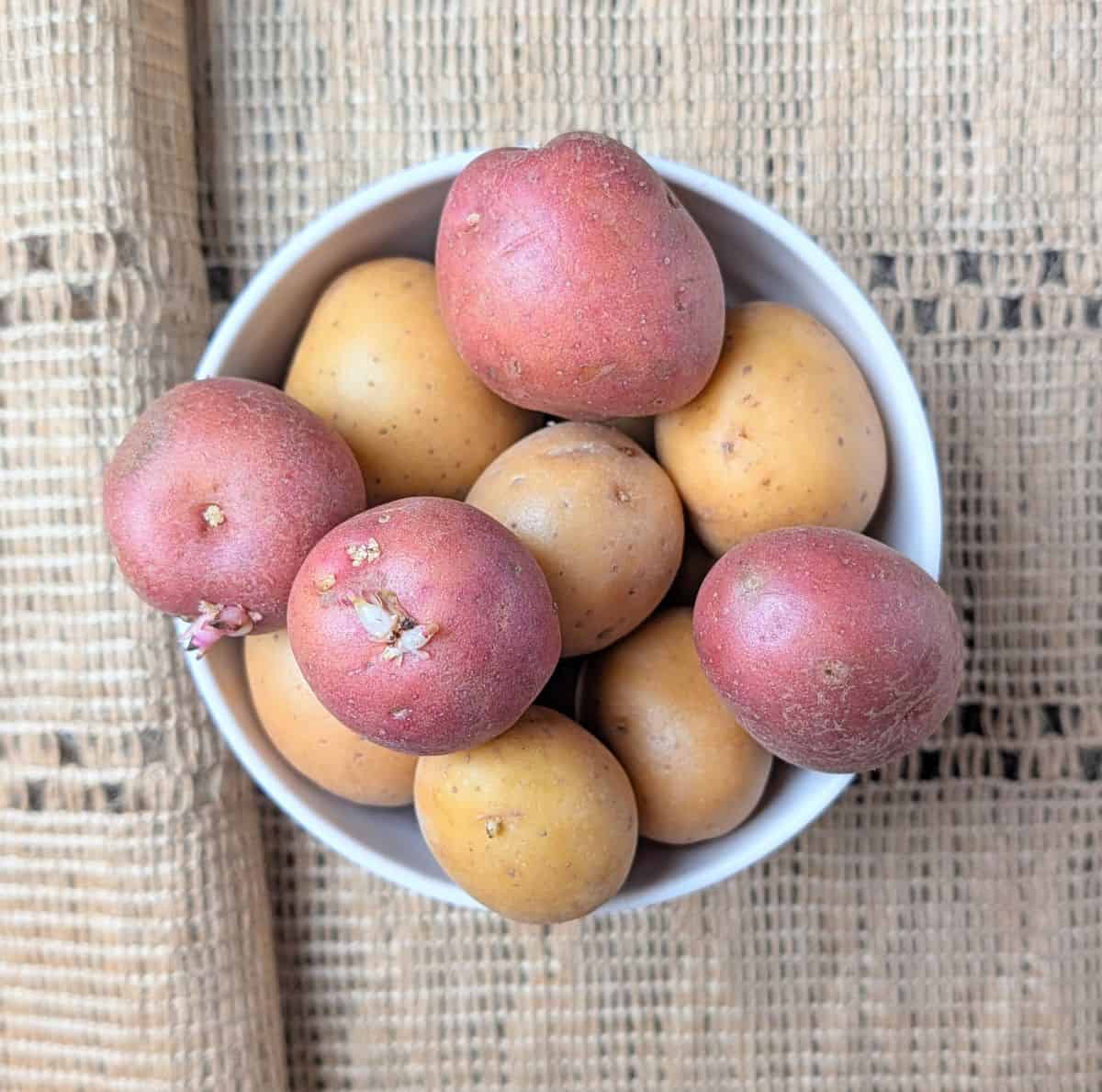
Sometimes, yes. According to Iowa State University Extension and Outreach, a firm potato with only small sprouts can be eaten once you cut away the entire sprout and the eye it grew from. The concern is that sprouts, green skin, and the area around the eyes have the highest levels of natural compounds called solanine and chaconine, which can taste bitter and may cause headaches, vomiting, and other digestive trouble.
Cooking does not destroy these compounds, so trimming is the step that matters. I am not a food safety expert, so everything here follows university extension guidance, and the rule is simple: when in doubt, throw it out. If you or someone in your family feels sick after eating a questionable potato, call Poison Control at 1-800-222-1222.
How to Tell if Sprouted Potatoes Are Safe
Run through this quick checklist before you cook.
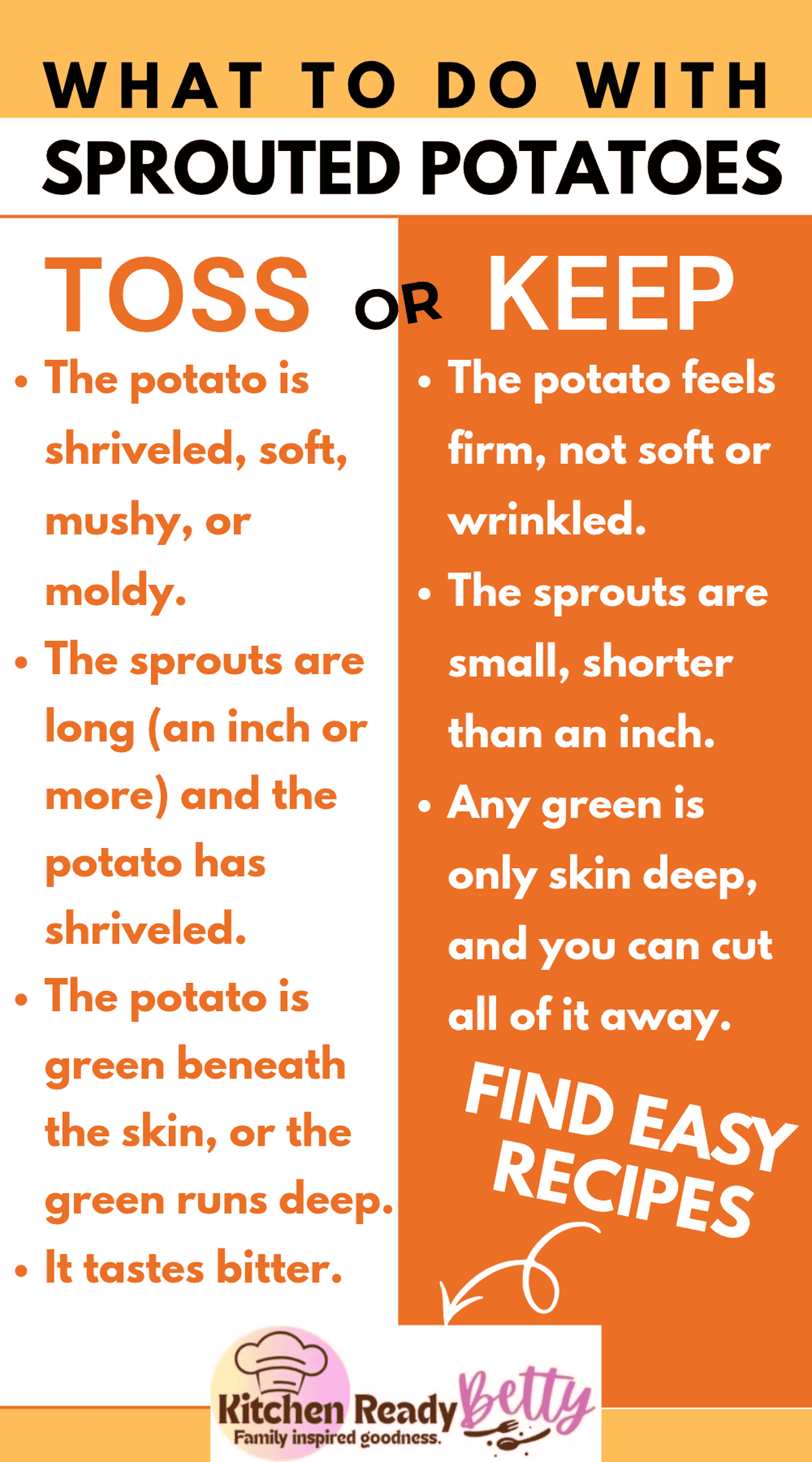
Keep and trim them if:
- The potato feels firm, not soft or wrinkled.
- The sprouts are small, shorter than an inch.
- Any green is only skin deep, and you can cut all of it away.
Toss them if:
- The potato is shriveled, soft, mushy, or moldy.
- The sprouts are long (an inch or more) and the potato has shriveled.
- The potato is green beneath the skin, or the green runs deep.
- It tastes bitter. Bitterness is a warning sign, so stop eating it.
How to Remove Sprouts From Potatoes
- Scrub the potato under cool running water and pat it dry.
- Snap or cut off every sprout.
- Use the tip of a paring knife or a vegetable peeler to dig out each eye, taking a little extra flesh around it.
- Peel the potato. This removes the thin layer under the skin, where levels are slightly higher.
- Cut away any green areas. If the green goes deeper than the skin, toss the potato.
- Cook the trimmed potatoes soon, and throw away all of the sprouts and peels.
How to Store Potatoes So They Don't Sprout
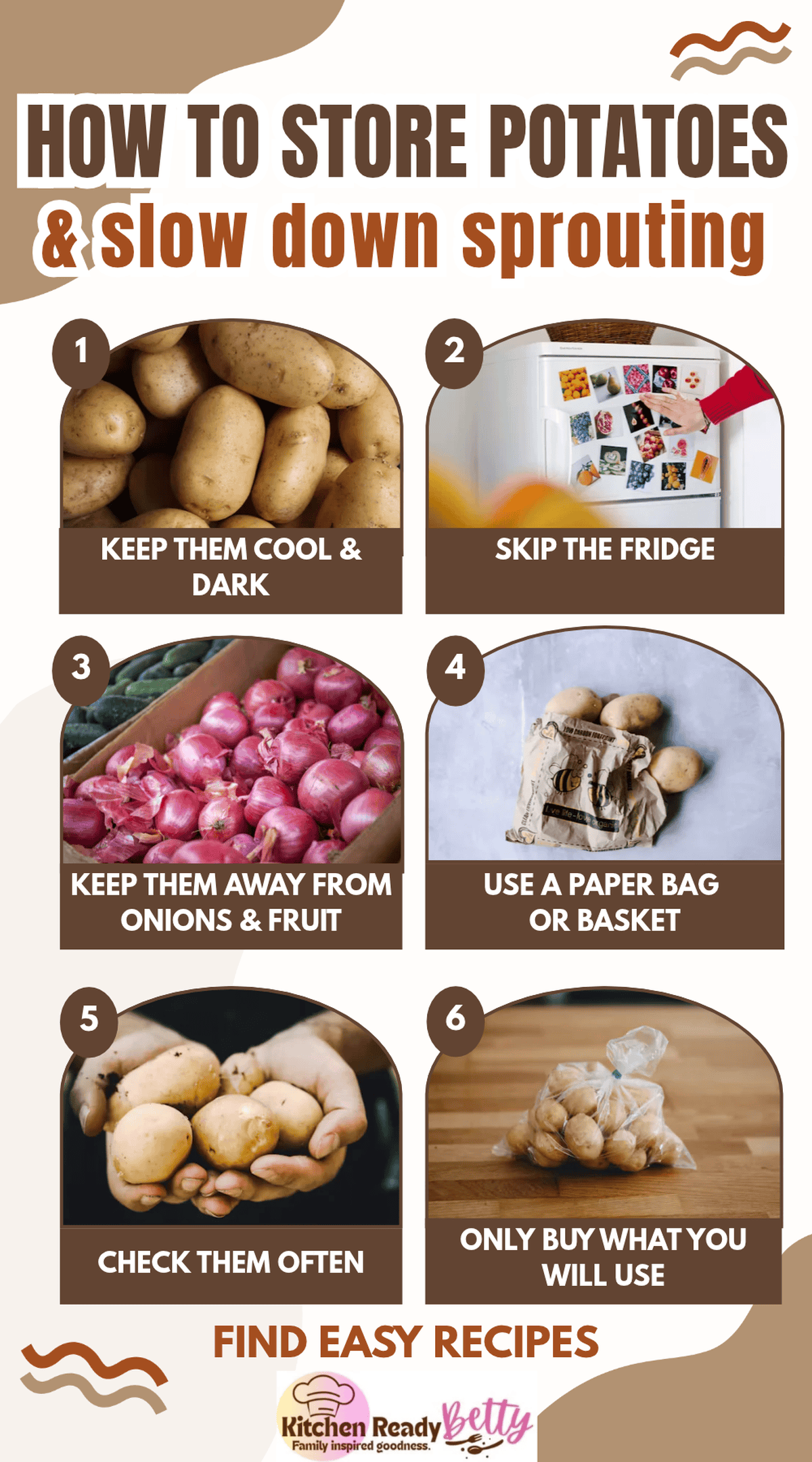
Sprouting is natural. Potatoes have a built-in dormancy that wears off over time, and it can happen even in ideal conditions. Good storage slows it down:
- Keep them cool and dark. Aim for about 45 to 50°F in a dark, dry, well-ventilated spot, away from appliances that give off heat. Stored this way, potatoes can last up to three months or longer, compared with about two weeks at room temperature.
- Skip the fridge. Cold turns the starches into sugars, which makes potatoes sweeter and makes them cook up dark.
- Keep them away from onions and fruit. Onions and ripening fruit like apples give off ethylene gas, which speeds up sprouting.
- Use a paper bag or basket. If you will use them soon, a paper bag in the pantry works well. Avoid sealed plastic bags.
- Check them often. Remove any soft or sprouting potatoes so they do not affect the rest.
- Buy what you will use. Smaller bags mean fewer potatoes sitting around waiting to sprout.
Best Recipes for Using Up Potatoes
Once your sprouted potatoes are trimmed and peeled, they work best in recipes that cook them all the way through. Here are some of my favorites:
- Easy Crockpot Potato Soup: A cozy, hands-off soup that cooks the potatoes until they are tender.
- Mexican Street Corn Chowder: A hearty chowder with street corn flavor, made in the slow cooker.
- Healthy Potato Salad: A lighter side dish for when you want something cold. It contains no mayo and is a vegan recipe.
- Seasoned Oven Roasted Potatoes: An easy side dish. Peel sprouted potatoes first, then roast as the recipe directs.
- Healthy Chicken Pot Pie: A lighted up, cozy classic without the cream and plenty of veggies, in casserole form.
If your potatoes are too far gone, add them to the compost instead.
What To Do With Sprouted Potatoes FAQ
Yes, if the potato is still firm and the sprouts are small. Cut away the whole sprout and eye, peel the potato, and remove any green. Toss it if it is shriveled, soft, or green beneath the skin.
No. University guidance says cooking does not destroy these compounds, so trimming and tossing are what keep you safe.
Potatoes have a natural dormancy that fades over time, and sprouts form at the eyes. Warm storage can speed this up, while light turns the skin green.
No. Cold temperatures turn the starches into sugars, so potatoes taste sweeter and cook up darker. A cool, dark pantry or cupboard is better.
Not necessarily. If the potato is still firm, the sprouts are small, and there is no deep green discoloration, you can simply cut away the sprouts, peel the potato, and cook it. However, if the potato feels soft, mushy, or shriveled, or if the sprouts are longer than an inch, it's best to throw it away or add it to your compost.
Yes, you can plant sprouted grocery store potatoes in your garden. You can plant them whole, or cut them into chunks (making sure each chunk has at least one strong sprout or "eye"). Let them dry for a day before planting. Just keep in mind that store-bought potatoes are sometimes treated with sprout inhibitors and aren't certified disease-free, so they may not produce as large or reliable a harvest as official seed potatoes.
Once a potato begins to sprout, its quality deteriorates much faster because it uses its own moisture and nutrients to grow the new sprouts. If the potato is still firm to the touch, try to trim and cook it within a few days. Once it starts feeling soft, wrinkled, or spongy, it is past its prime and should no longer be eaten.
Final Thoughts
Sprouted potatoes are not always a loss. If they are firm, only lightly sprouted, and free of deep green, trimming them well and cooking them soon can save you money and cut down on waste. If they are soft, shriveled, long-sprouted, or green throughout, let them go and start fresh. For more storage guidance, the FoodKeeper app at FoodSafety.gov is a handy reference.
Do you have a favorite way to use up potatoes before they sprout? Tell me in the comments, because I would love to hear your ideas!

David @ Spiced says
Interesting. This is super helpful knowledge...especially as we go into the winter as we always seem to have leftover potatoes around. And sure enough some of those potatoes grow eyes. Now I know!!
Kitchen Ready Betty says
Hi David! I'm so glad you found this guide on what to do with sprouted potatoes helpful! Winter is definitely that time of year when leftover potatoes seem to grow eyes in the pantry. Knowing exactly whether to keep or toss those sprouting potatoes is a great trick to have up your sleeve to help reduce food waste.