
Greek yogurt vs. sour cream: which one should you use? They're close, but not the same. Here's how they compare, and when it's safe to swap one for the other.

The Quick Answer
Greek yogurt and sour cream are both thick, tangy, and creamy, and in many recipes you can swap one for the other 1:1. The main differences: Greek yogurt is tangier, higher in protein, and lower in fat. Sour cream is richer, milder, and holds up better to heat. Use Greek yogurt for dips, dressings, toppings, and most baking. Use sour cream for hot soups, sauces, and recipes where richness matters.

I keep both in my fridge, and I'll be honest: which one I grab depends on what I'm making. Here's how I decide, what actually changes when you swap them, and what to do when a recipe needs a little help.
Jump to:
- The Quick Answer
- Greek Yogurt vs. Sour Cream: Side by Side
- Nutrition Comparison
- How They're Made
- Can You Substitute Greek Yogurt for Sour Cream?
- Baking With Greek Yogurt Instead of Sour Cream
- Cooking With Greek Yogurt: How to Stop It From Curdling
- When to Use Each: Quick Cheat Sheet
- Greek Yogurt vs. Sour Cream: Recipes to Try
- Frequently Asked Questions
- Final Thoughts
- 💬 Comments
Greek Yogurt vs. Sour Cream: Side by Side
| Greek Yogurt (plain) | Sour Cream | |
|---|---|---|
| Made from | Cultured milk, strained to remove whey | Cultured cream |
| Taste | Tangier, more tart | Milder, richer, slightly sweet |
| Texture | Thick, can be a little chalky if nonfat | Smooth, silky, creamy |
| Handles heat? | Can curdle or split | Much more stable |
| Best for | Dips, dressings, marinades, toppings, baking | Hot soups, stroganoff, baked potatoes, rich sauces |

Nutrition Comparison
Numbers vary by brand and fat level, so check your own labels. Here are approximate values per 2 tablespoons to give you the general idea:
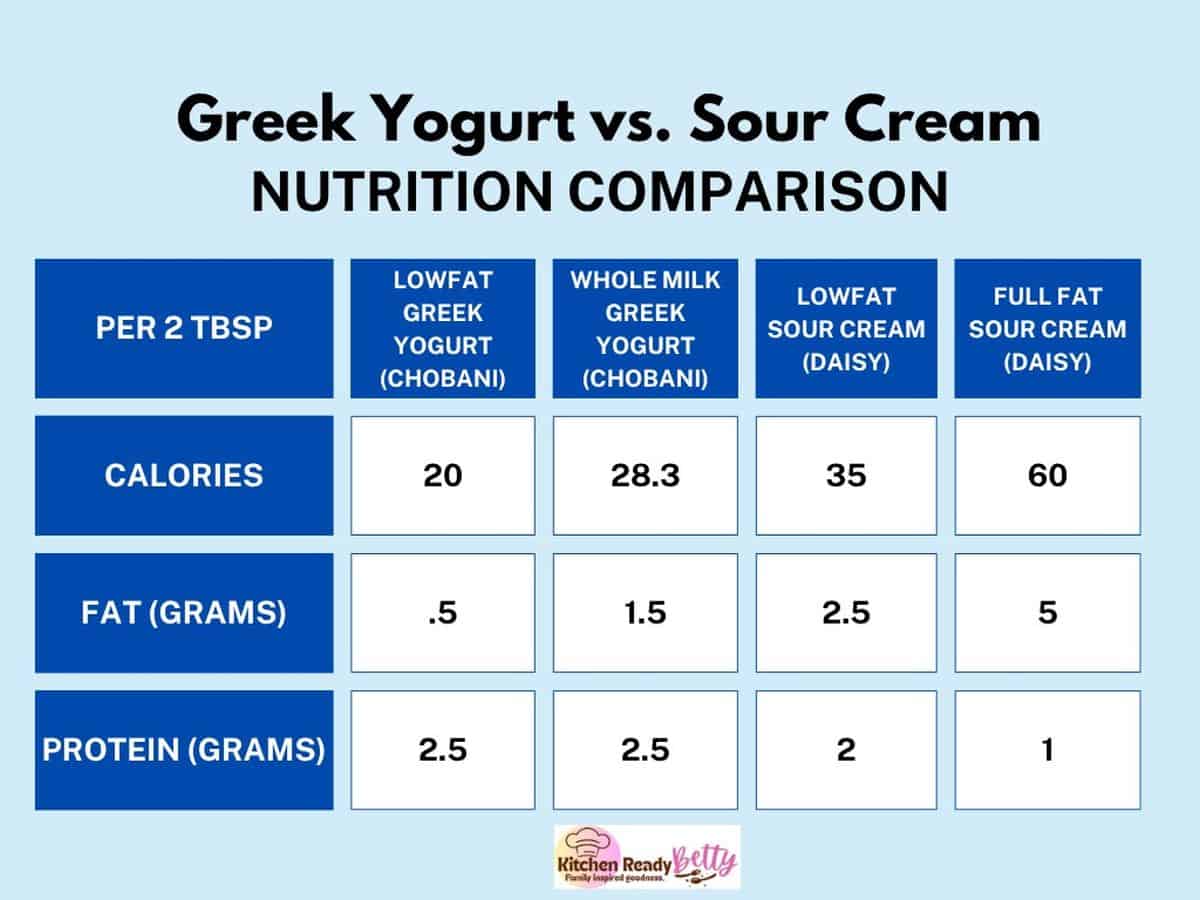
Which is healthier? Greek yogurt has more protein and fewer calories, so it's the lighter choice if that's what you're after. It also usually contains live cultures (look for "live and active cultures" on the label). But sour cream isn't a bad choice. A spoonful on tacos or a baked potato is a small amount, and the richness often means you use less. The best one is the one that makes the recipe work and that your family will actually eat.
How They're Made
Greek yogurt is milk that's been cultured into yogurt and then strained to remove most of the whey. Straining makes it thick and concentrates the protein, and it also keeps the tang.
Sour cream is regular cream that's been fermented with bacterial cultures. That's why it's rich and mild.

Can You Substitute Greek Yogurt for Sour Cream?
Usually, yes, and you can use the same amount. Swap 1 cup of sour cream for 1 cup of Greek yogurt. It works best in:
- Dips and spreads
- Salad dressings and ranch
- Toppings for tacos, chili, and baked potatoes
- Marinades for chicken
- Cold salads like potato salad, chicken salad, and cucumber salad
For the best result, choose full-fat or 2% Greek yogurt over nonfat. Nonfat can taste sharper and a bit chalky. If your yogurt is thicker than the sour cream called for, stir in a splash of milk to loosen it.
Going the other direction? Sour cream instead of Greek yogurt works 1:1 too, but expect a milder flavor and less protein.

Baking With Greek Yogurt Instead of Sour Cream
Both add moisture and tang, and the acidity helps keep cakes and muffins tender. In most cakes, muffins, quick breads, and coffee cakes, Greek yogurt works as a 1:1 swap.
- Use full-fat or 2% for the best crumb
- Bring it to room temperature before mixing
- If the batter seems thicker than usual, add 1 to 2 tablespoons of milk per cup of yogurt
- Don't overmix
I'd be more careful with cheesecakes and creamy frostings, where the extra tang and thickness can change the final texture.

Cooking With Greek Yogurt: How to Stop It From Curdling
Here's where sour cream wins. Greek yogurt has less fat, so its proteins tighten and separate when it gets too hot, leaving you with a grainy sauce. If a recipe needs it in a hot dish, try these fixes:
- Add it at the very end. Turn off the heat first, then stir it in.
- Temper it. Whisk a few spoonfuls of the hot liquid into the yogurt before adding it to the pot.
- Use full-fat Greek yogurt. It's more stable than nonfat.
- Don't let it boil. Keep the dish at a gentle warmth after the yogurt goes in.
- For extra insurance, whisk about a teaspoon of cornstarch into the yogurt first.
For dishes like beef stroganoff or creamy soups, sour cream is simply more forgiving.
When to Use Each: Quick Cheat Sheet
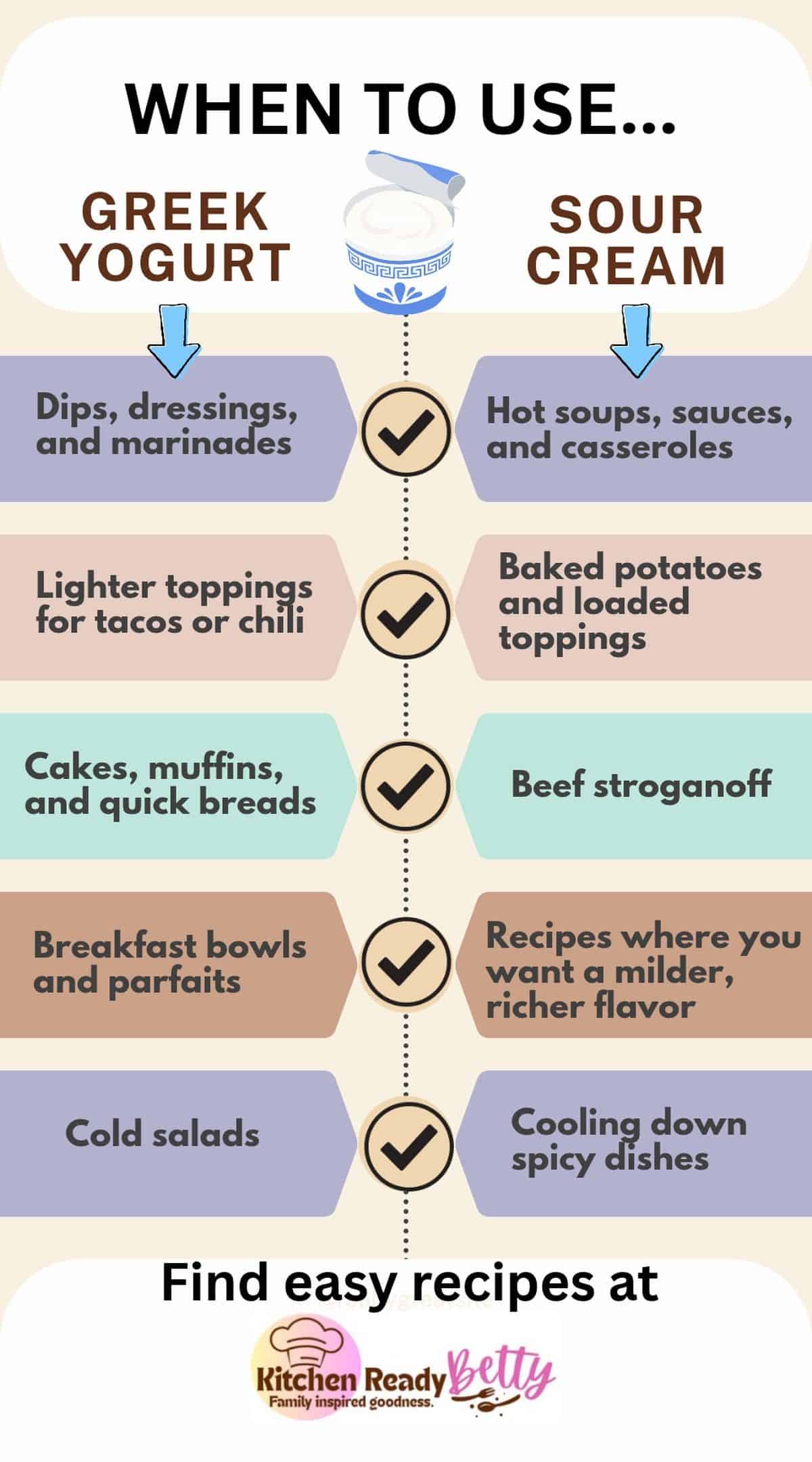
Choose Greek yogurt for:
- Dips, dressings, and marinades
- Lighter toppings for tacos or chili
- Cakes, muffins, and quick breads
- Breakfast bowls and parfaits
- Cold salads
Choose sour cream for:
- Hot soups, sauces, and casseroles
- Baked potatoes and loaded toppings
- Beef stroganoff
- Recipes where you want a milder, richer flavor
- Cooling down spicy dishes
Greek Yogurt vs. Sour Cream: Recipes to Try
- Creamy Cucumber Sour Cream Salad: try it both ways and see which you prefer
- Greek Yogurt Blueberry Muffins: see why this recipe contains no oil
- Healthy Greek Yogurt Fruit Dip or Sweet & Easy Fruit Dip (made with sour cream)
- Easy Tzatziki Sauce: where Greek yogurt is the star of the show
- Frozen Strawberry Yogurt Bites: this healthy snack offers a boost of protein, straight from your freezer
- Double Chocolate Banana Bread: a special ingredient provides extra moisture and creaminess
- Zesty Cajun Pasta Salad with Chicken, Easy Pea Salad Recipe with Ham, & Avocado Egg Salad: where Greek yogurt replaces sour cream and reduces the amount of mayo used
- Chunky Guacamole: see why this Greek yogurt recipe is more indulgent than traditional guacamole made with mayo
To find even more recipes, type in "Greek yogurt" or "sour cream" in the search bar below.👇
Frequently Asked Questions
It's close, but not identical. Greek yogurt is tangier and a little tarter, while sour cream is smoother and milder. In dips and toppings, most people don't mind the difference.
Generally it has more protein and fewer calories, especially the nonfat and 2% versions. Sour cream is richer, so it's higher in fat and calories, but small portions fit into most diets.
Regular yogurt is thinner and more watery. You can strain it through a coffee filter or cheesecloth in the fridge for an hour or two to thicken it. For the time and effort, it's honestly easier just to buy Greek yogurt.
No. Use plain for savory recipes and for most baking. Vanilla adds sweetness and flavor that can throw off a recipe.
Yes, with care. Add it off the heat or temper it first, and use full-fat yogurt to lower the chance of curdling.
It's a personal preference. Sour cream is richer and cools spicy heat nicely, while Greek yogurt is tangier.
Greek yogurt more reliably does, but only if the label says it contains live and active cultures. Sour cream is made with cultures, but it isn't typically marketed as a probiotic food.

Final Thoughts
If you're deciding between the two, think about what the recipe needs. For something cold, tangy, or lighter, Greek yogurt is a great pick. For something hot, rich, or creamy, reach for sour cream. And when you're out of one, the other will usually save your dinner. Have a favorite way to use either one? Let me know in the comments!
Comments
No Comments